What Milan Really Did with the Winter Olympics
When Architecture Become Emotion: What Milan Really Did with the Winter Olympics
Olympics often suffer from gigantomania building for the ages only to leave empty concrete boxes behind. But Milan 2026 changed the rules of the game and showed what modern winter olympics architecture should be. Here space ceased to be just a background for sports. It turned into an experience that you live through your body like music or dance. This is not a story about building walls this is a new perspective on architecture for global events where the sculpture of movement becomes the main focus

San Siro: From Stadium to Theatrical Stage
Imagine the legendary San Siro. Usually this is a rigid hierarchy with the field here and the stands there. At the opening ceremony they broke this scheme applying bold architectural storytelling. The stadium turned into a pure volume with no main facade. The viewer no longer looked at the event he was inside it.
The light spiral in the center did not overwhelm with scale but set the rhythm. This is pure conceptual architectural design when space is formed not by concrete but by light and people. It was like the work of a sculptor only instead of clay there was a living crowd and beams of spotlights.
The Body as Architecture
The most interesting decision was to subordinate space to the body which vividly demonstrates the role of art in architectural design. Ramps and passages did not force people to march they gently suggested the route. It resembled a musical score where every movement of a person adds to the melody.
Hundreds of performers in the arena did not just dance. They created a living sculpture and this architecture and art integration looked flawless. In the compositions one could guess the silhouettes of classical Italian statues that suddenly came to life. It was a powerful reminder that the Olympics is about the unity of bodies about the strength that is born when the individual dissolves into the collective.
The Fire That Does Not Stand Still
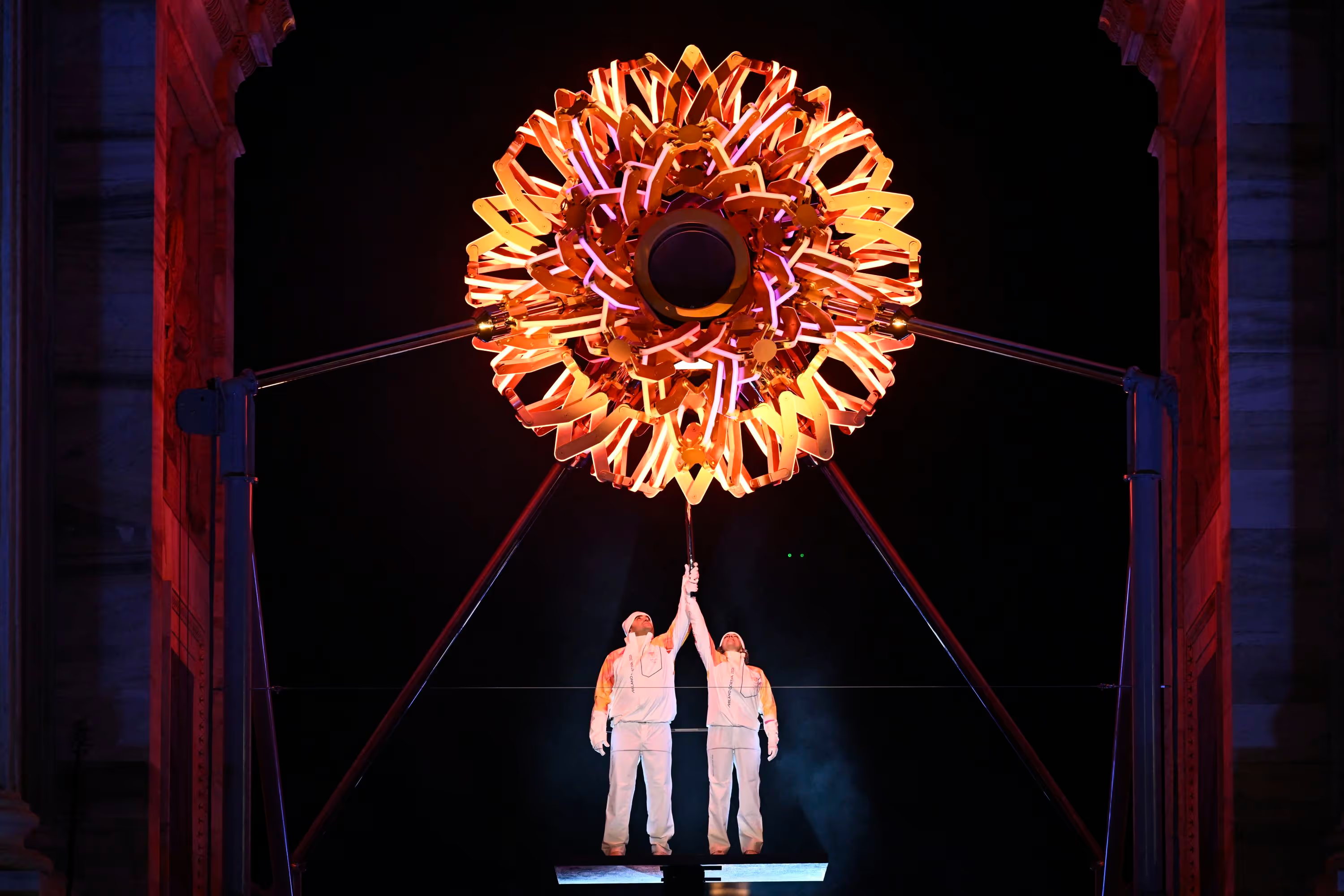
The main symbol the Olympic Cauldron became a revolution embodying advanced architectural design thinking. Instead of one pretentious vase we saw a distributed gesture with two cauldrons in different locations leading a dialogue with each other.
The design was inspired by the sketches of Leonardo da Vinci. He studied vortices of water and air seeing form as a trace of movement. The cauldron in Milan is a kinetic sculpture of metal petals that are constantly moving. The fire did not sit in it but danced together with the structure. This is no longer engineering this is architecture beyond function pure poetry in metal.

Frozen Flame: Congealed Energy
Reflecting on this magic of form the Ariete Art team created the sculpture Frozen Flame. This is our answer to the Olympic fire. We did not copy the flame but tried to catch its tension that moment between the explosion of energy and silence. Metal here works as a conductor of force creating a form that seems movable even when it stands still.
Why Is This Important?
Milan clearly demonstrated how global events influence architecture. It is no longer obliged to be an eternal monument. It can be temporary but leave a mark stronger than stone a mark in emotional memory.
True cultural identity in architecture here did not scream with flags it was felt in proportions in light in respect for the human. This is true art and architecture as cultural expression when space ceases to be just a place on a map and becomes an event that you will never forget.