PAD Paris 2026 – Design Beyond Function: Sculpture, Material and Narrative Space
Introduction
This year PAD Paris 2026 stood out particularly clearly as a space where contemporary collectible design transcends functionality and presents itself as a form of design as art. Here sculptural design becomes an artistic statement on various themes, even philosophical ones
Design as Narrative Space
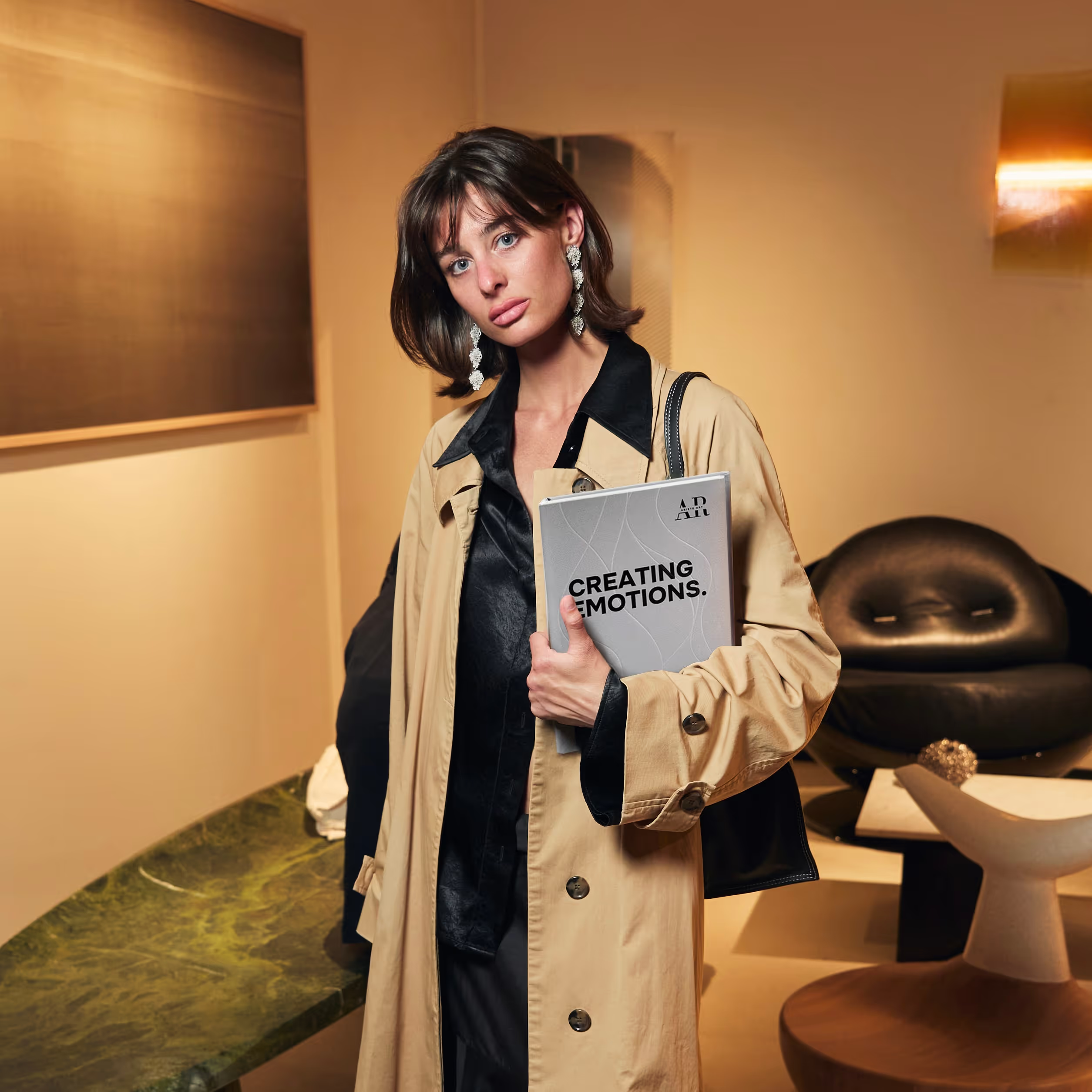
Kristina | Art curator at Ariete Art
Visiting the fair, the movement through it felt uniquely immersive. Stands were not just a simple sequence of objects, but a curated selection of self-contained worlds. Each stand was crafted as a design narrative environment, revealing the author's logic and meanings: from accent lighting to meticulously chosen wall colors and textures. This was no classic showcase, but full scenography where objects become part of a cohesive story, heroes of a unique tale inviting all visitors in
Material as Language
One key aspect, of course, is material in design – the source of form and meaning. Textile, wood, ceramics, metal, and even plastic speak their own language to the viewer, revealing glimpses of the creation process, time, and exclusivity. Craftsmanship here builds depth of feeling for the interior piece, often infusing objects with metaphor
Sculpture and Form
Based on what we observed, an interior object is not limited to function alone; it can unfold as a carrier of meaning, holding an idea that remains relevant over decades. In this sense, sculpture trends in 2026 are defined by the sculptural interpretation of rounded, minimalist forms that feel self-sufficient and conceptually complete
A strong example is ILKKA SUPPANEN — Liquid Mirror II made with crystal glass, silvering and steel. It reacts to light and space, visually expanding a room and changing with the viewer’s position. Minimal, but never static
Ron Arad — Cut and Roll pushes metal into softer, distorted movement. It keeps an engineered feel, but breaks rigid geometry, which works well in interiors dominated by straight architectural lines
Igor Dobrowolski — ACT III is more expressive and narrative. It doesn’t blend in, it anchors attention and becomes the focal point in calm, neutral spaces
In contrast, TORU KUROKAWA focuses on balance and restraint, while Laurence Bonnel brings a tactile, ceramic approach where slight imperfections add warmth and material depth
The difference is material choice. Metal, stone, ceramics, and mirror finishes don’t just change appearance — they define how a space is perceived. A good object sets the tone. A weak one disappears or clutters the room
Reflection in Company Practice
Combinations of crystalline structures with mirror metal surfaces left a particular impression on us, creating a unique dialogue of transparency and surface reflection, fragility and density. This language resonates with us too: in Ariete Art works, we also turn to these materials and their interplay. Working with crystalline materials, including our signature Crystal Pure, sharpens the meaning – an object is simultaneously material and dense, yet light and airy
Conclusion
PAD Paris 2026 continues to convey design as a phenomenon where material in design becomes language, an object becomes a story, and space remains a way to tell something through distinctive interior pieces. The fair definitively erased boundaries between design and art. This resonates with our ongoing quest for inspiration, which we pursue at Ariete Art in contemporary sculpture and collectible design fair